
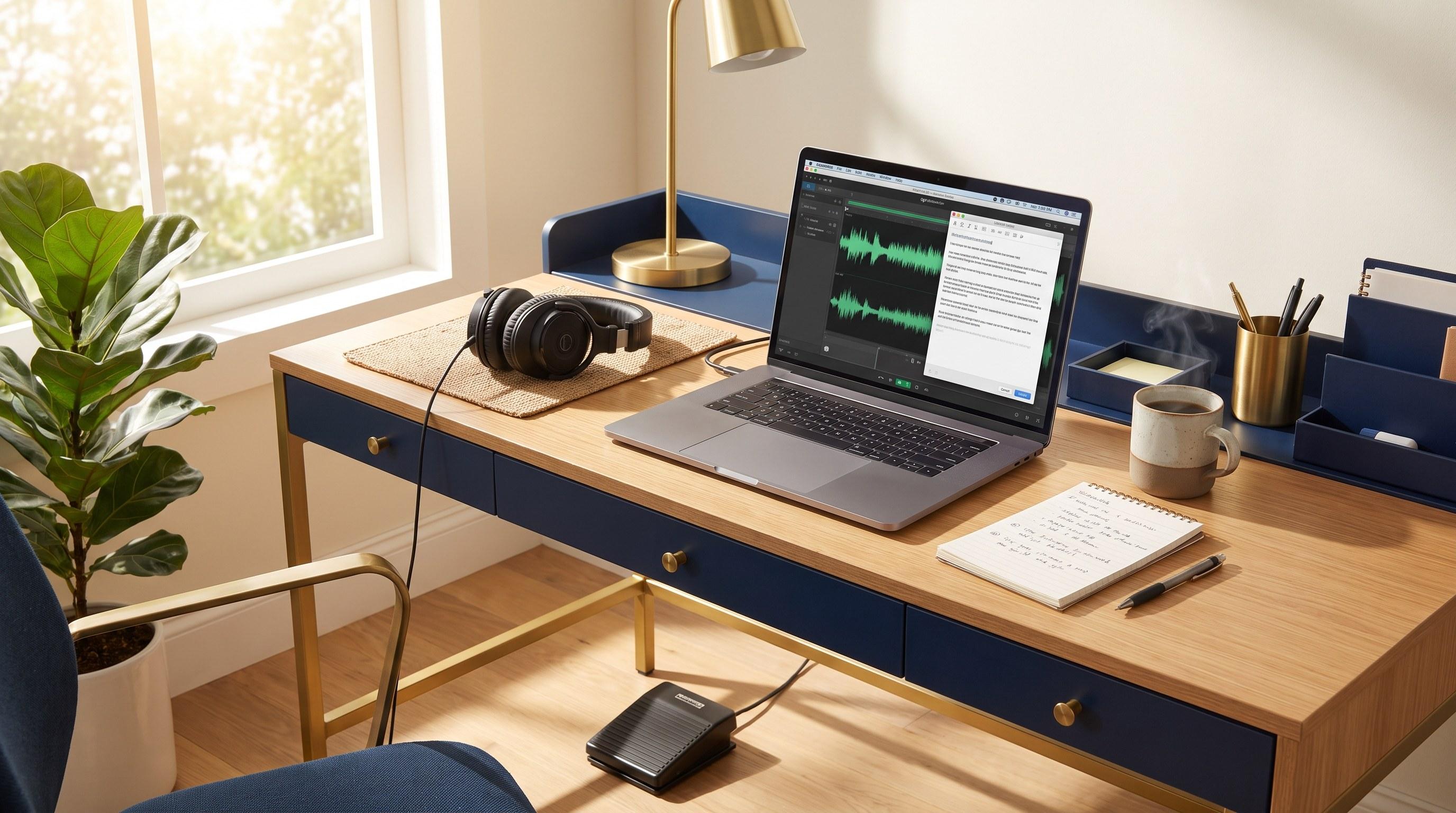
Transcription Side Hustle: How to Earn $1,000-$2,000 a Month Typing From Home in 2026
A transcription side hustle lets you earn $1,000 to $2,000 a month from home in 2026 by turning audio and video recordings into clean, written text for podcasters, legal teams, medical offices, and content companies. You don't need a degree or special equipment to start — just accurate typing, a quiet space, and the patience to pass a short qualification test.
This guide is for anyone who types faster than they talk on the phone and wants flexible, part-time income they can do around a day job, school, or family schedule. We'll walk through what transcription side income actually pays, how the work flows from sign-up to paycheck, how to pick the right platform, and how to grow from general work into higher-paying specialized niches.
Transcription Side Hustle at a Glance
If you're wondering whether transcription is worth your time in 2026, the short answer is yes — as long as you treat it like a skill to build, not a one-time gig. Pay starts modest for general work and climbs quickly once you specialize or speed up.
| Platform | Typical Pay | Best For | Getting Started | |---|---|---|---| | Rev | $0.30-$0.65 per audio minute | Total beginners | Apply and start on general queue, no entrance test | | TranscribeMe | $15-$22 per audio hour | Flexible, short shifts | Short online qualification quiz | | GoTranscript | $0.60-$0.80 per audio minute | Steady, repeat volume | Graded sample transcript | | Direct legal/medical clients | $1.00-$2.50 per audio minute | Experienced, certified typists | Portfolio plus a specialty certificate |
A few quick facts worth knowing before you apply:
- Most beginners average 3-4 hours of audio work per hour of paid time until their typing speed catches up, so early pay per clock-hour is lower than the per-minute rate suggests.
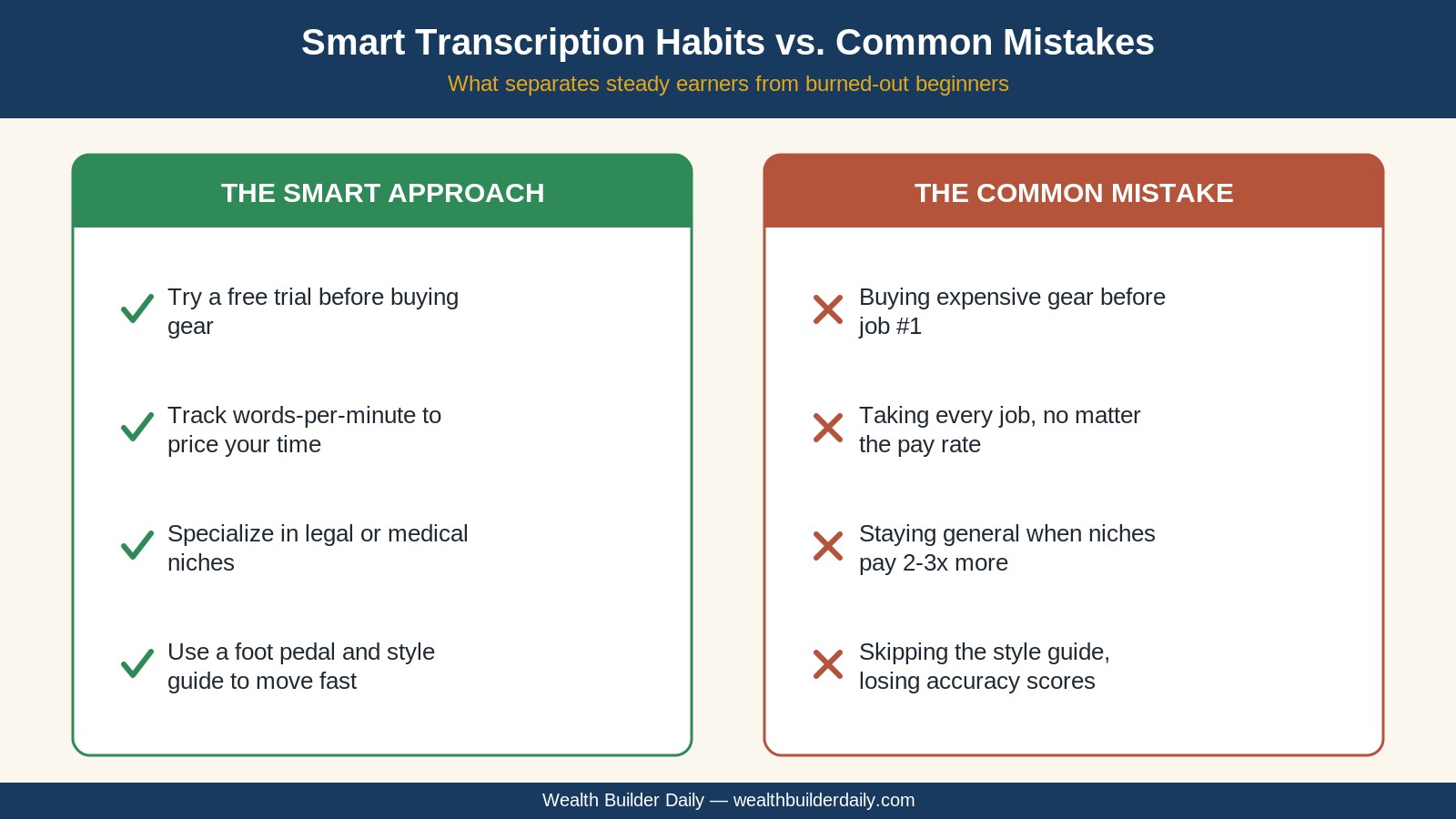
- A basic foot pedal and headset (under $60 total) can cut your transcription time by 20-30% within the first month.
- If straight transcription isn't the right fit, a proofreading side hustle uses many of the same detail-oriented skills.
- Most platforms pay via PayPal or direct deposit on a weekly or biweekly schedule, so cash flow is predictable once you're active.
Built on Real Experience
At Wealth Builder Daily, we've spent years helping everyday people find realistic, flexible ways to add income without upending their schedule. We look at side income the same way we look at budgeting: real numbers, honest timelines, and no promises of overnight riches. In this guide, we'll walk you through exactly how a transcription side hustle works in 2026, what it really pays after accounting for your learning curve, which mistakes cost beginners the most time, and how to move from general transcription into the specialized work that pays two to three times more.
How a Transcription Side Hustle Works
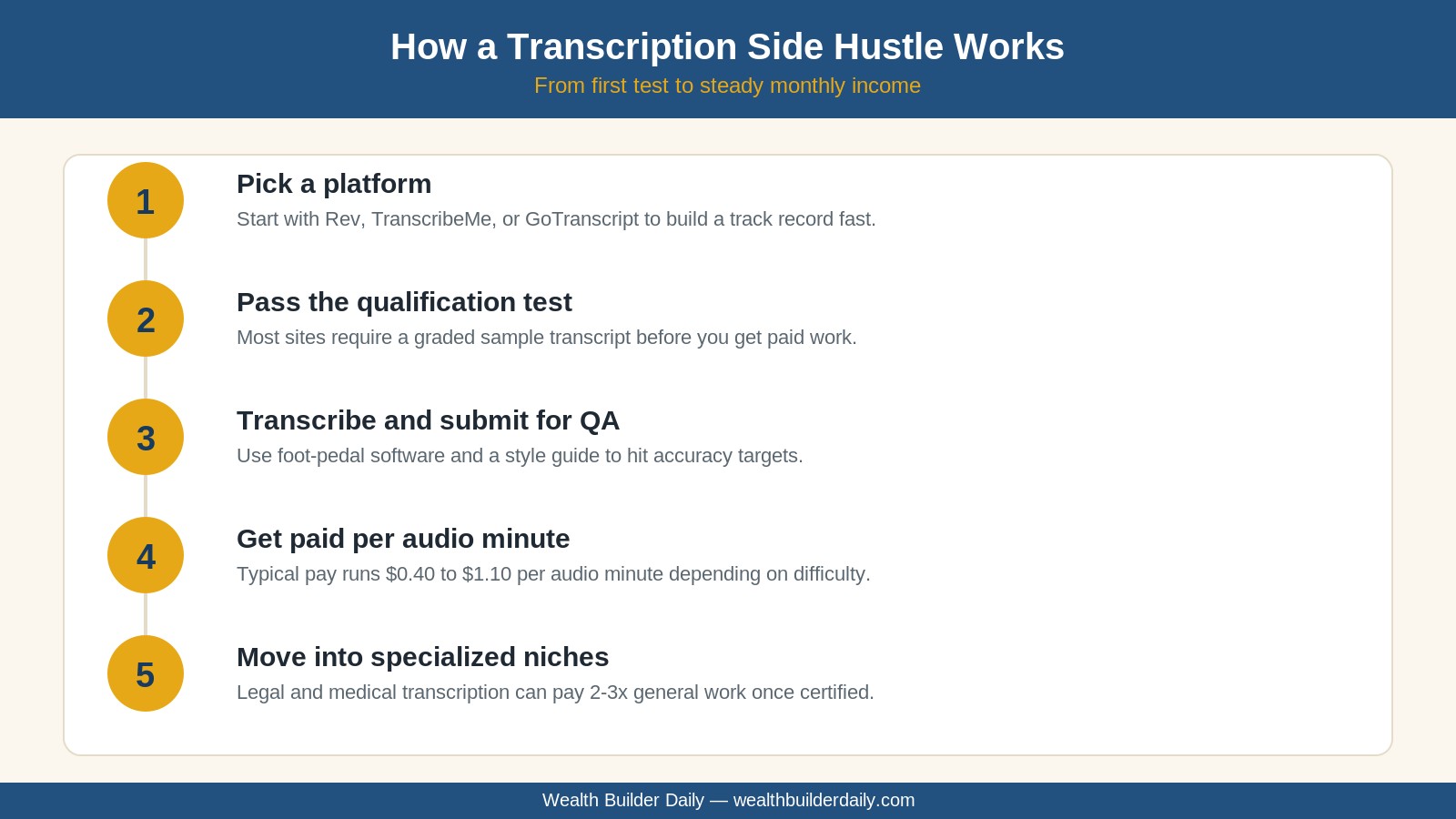
A transcription side hustle works by matching your typed-text skills to companies that need spoken audio converted into accurate written records — podcast episodes, business meetings, legal depositions, and medical dictations all need this daily. You listen to an audio file, type what you hear following a specific style guide, and submit the finished transcript for quality review before you're paid. Unlike many freelance gigs, you rarely deal directly with clients; the platform handles job assignment, quality checks, and payment, which makes it a lower-friction way to start earning without any sales or negotiation.
The mechanics are simple, but a few components make the difference between a frustrating first week and a repeatable income stream:
- Style guide — every platform has its own formatting rules (verbatim vs. clean verbatim, timestamps, speaker labels), and following it closely is what keeps your accuracy score high.
- Foot pedal software — lets you rewind, pause, and slow down audio with your foot instead of your mouse, which speeds up typing significantly.
- QA review — a quality team checks your submission for accuracy before you're paid, and repeated errors can lower your access to higher-paying jobs.
- Speed benchmarks — most platforms track your words-per-minute and turnaround time, and faster typists get first pick of the best-paying files.
Once you've submitted a handful of clean transcripts, most platforms open up more job types and slightly better pay tiers automatically — this is where a transcription side hustle starts to feel less like trial-and-error and more like a real part-time job.
How to Choose the Right Transcription Platform
Picking the right starting platform matters more than most beginners expect, since the wrong fit can mean weeks of low pay before you realize it. Work through these criteria before you commit your first few hours:
- Pay structure — decide whether you prefer per-audio-minute pay (more predictable) or per-audio-hour pay (better for slower typists early on).
- Entrance requirements — some platforms, like Rev, let you start immediately, while others require a graded test that can take a few days to pass.
- Volume availability — check whether the platform has consistent job flow in your time zone, since some queues run dry during off-peak hours.
- Subject matter — general transcription pays less than legal, medical, or academic work, so consider whether you have relevant background knowledge.
- Equipment needs — factor in the one-time cost of a foot pedal and quality headset against your expected monthly earnings.
- Payment schedule — weekly payouts help with cash flow, while biweekly or monthly schedules require more patience.
- Growth path — look for platforms that clearly explain how top performers move into higher-paying specialty queues, since that roadmap tells you whether this is a short-term gig or a real side income you can scale.
Here's a real number worth planning around: a typist who averages 60 words per minute can typically complete one audio hour of general transcription in about 3 hours of work, which at $0.50 per audio minute works out to roughly $10 per clock-hour starting out. That climbs toward $15-$20 per clock-hour by month three as speed and familiarity improve. If you want a broader income comparison first, How to Make $1,000/Month on the Side walks through several freelance skills side by side.
Transcription vs. Proofreading: Finding Your Better Fit
Transcription and proofreading both reward careful, detail-focused work, but they draw on different strengths. Transcription is about listening accuracy and typing speed — you're creating the text from audio, often working through background noise, accents, and overlapping speakers. Proofreading is about reading accuracy — you're refining text that already exists, catching grammar slips and formatting issues rather than generating content from scratch. Some side hustlers eventually do both, using transcription for volume and proofreading for higher per-word rates on shorter assignments. If you'd rather work from written drafts than headphones, the proofreading side hustle guide breaks down that path in detail.
Transcription Side Income for Every Situation
Transcription work fits an unusually wide range of schedules because most platforms let you log on whenever files are available, with no shift requirements and no manager checking in. That flexibility is exactly why it appeals to people juggling a full-time job, school, or caregiving on top of wanting extra income.

- Busy parents can knock out a file or two during naptime or after bedtime, since most jobs are broken into short audio segments rather than long shifts. Pairing this with a zero-based budget makes it easy to see exactly where the extra income should go.
- Night-shift and swing-shift workers often find transcription queues quieter and easier to claim during off-peak hours, since fewer transcriptionists are online at 2 a.m.
- Students and retirees with flexible daytime hours can build up experience faster, which speeds up the move into higher-paying specialized transcription work.
Beginner, Intermediate, and Advanced Setups
A beginner setup is just a laptop, wired headphones, and free transcription software — enough to test whether you enjoy the work. An intermediate setup adds a USB foot pedal (roughly $30-$50) and paid playback software, which noticeably speeds up turnaround. An advanced setup includes a specialty certification (legal or medical transcription courses run $200-$600) that unlocks the highest-paying direct-client work.
Personalizing Your Approach in 2026
In 2026, AI-assisted transcription tools have taken over the most repetitive first-pass work, which means human transcriptionists are increasingly valued for editing AI drafts for accuracy, nuance, and context rather than typing every word from scratch. Building comfort with these editing workflows now — rather than avoiding them — is one of the clearest ways to stay competitive and keep your per-hour pay climbing.
Frequently Asked Questions
How much can I really make with a transcription side hustle?
Most beginners earn $300-$600 a month working a few hours a week, while experienced typists working 10-15 hours weekly on specialized files can reach $1,000-$2,000 a month. Pay scales with both speed and subject-matter expertise, so income tends to grow steadily over your first three to six months.
Do I need certification to start transcription work?
No certification is required for general transcription platforms like Rev or TranscribeMe — you just need to pass a short qualification test. Certification becomes valuable later, mainly for legal or medical transcription, where it can double or triple your per-minute pay.
What equipment do I actually need to begin?
You can start with just a laptop and a pair of wired headphones. A USB foot pedal (around $30-$50) is the single best upgrade once you're consistently working, since it speeds up playback control and reduces mouse strain during long sessions.
Final Thoughts
A transcription side hustle is one of the more realistic ways to turn spare hours into steady monthly income in 2026, especially if you're already a fast, accurate typist. Start with a beginner-friendly platform, build your speed and accuracy score over the first month, and use that track record to move into better-paying specialized work.
- Plain-language guidance: no jargon, just a clear path from sign-up to your first paycheck.
- Real numbers and examples: actual pay ranges and per-hour math, not vague promises.
- Proven, time-tested methods: the same platforms and workflows steady earners have used for years.
- Free practical tools and guides: more side income breakdowns to help you compare paths and choose what fits your life.
Ready to see how transcription stacks up against other side income options? Browse more real, numbers-first guides on the Wealth Builder Daily blog, and if you want an outside look at protecting and growing the income you earn, the Consumer Financial Protection Bureau has solid, free resources on managing extra income wisely as your side hustle grows into a steady second stream in 2026 and beyond.
The Newsletter
Get the Free Budget Tracker
Join our weekly newsletter. Practical money guides, no fluff. Unsubscribe anytime.