
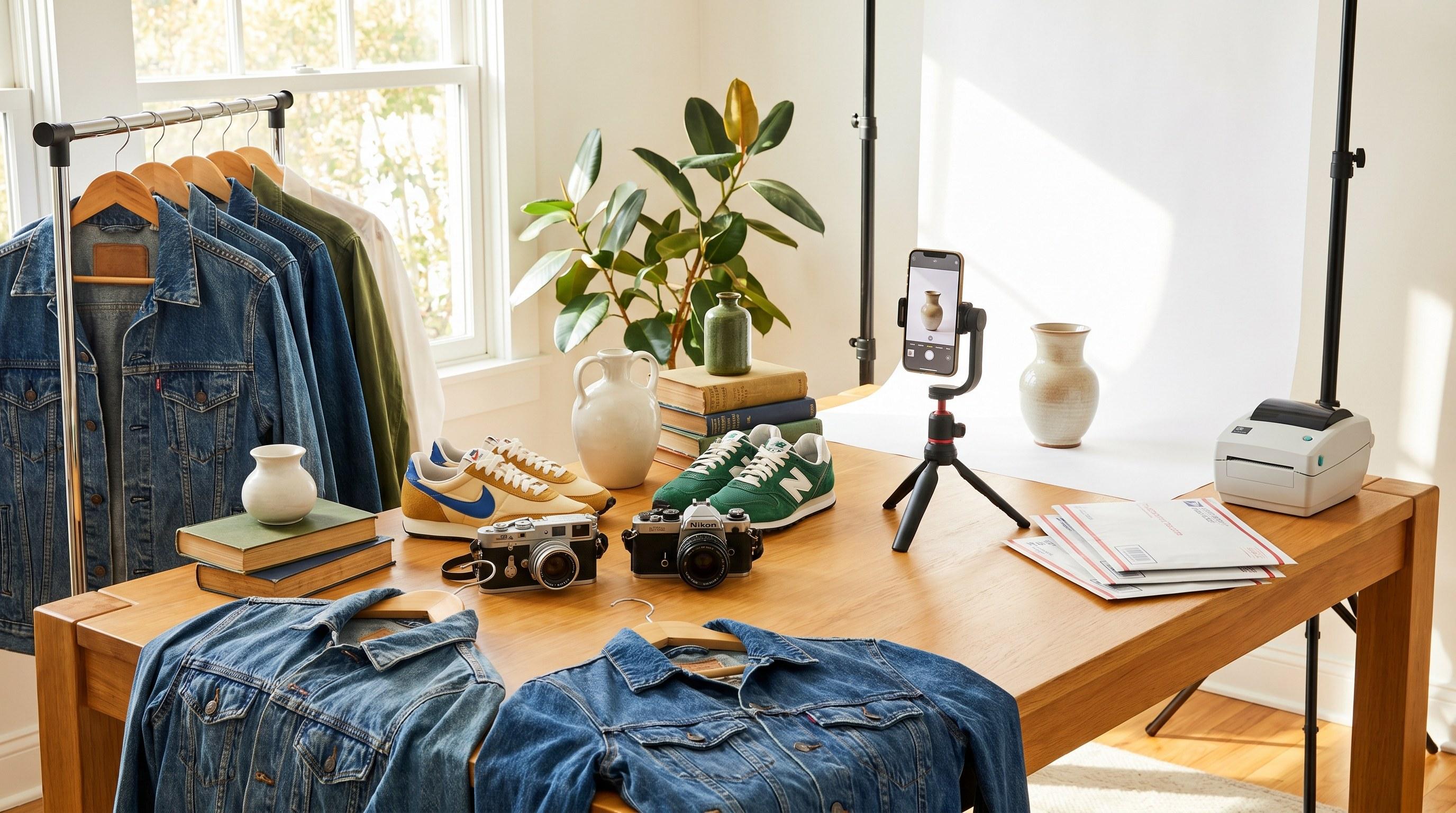
Reselling Side Hustle: How to Make $1,000/Month Flipping Thrift Finds in 2026
A reselling side hustle is one of the most beginner-friendly ways to earn extra money in 2026: you buy underpriced items cheap, then sell them online for more than you paid. No degree, no big startup budget, and no special skills required to start.
This guide is for anyone who wants real extra income without launching a complicated business. You'll learn how reselling actually works, which items make the most money, how to price and ship like a pro, and how to grow a $20 test into a steady $1,000-a-month routine.
Reselling Side Hustle at a Glance
A reselling side hustle means sourcing items at a low price (thrift stores, clearance racks, estate sales, even your own closet) and selling them at market value on platforms like eBay, Poshmark, Mercari, or Facebook Marketplace. Your profit is the gap between what you paid and what someone else will happily pay.
Here's a quick snapshot of how the most common platforms compare so you can pick where to start:
| Platform | Best For | Typical Fees | Key Feature | |----------|----------|--------------|-------------| | eBay | Electronics, collectibles, brand-name goods | ~13% final value | Largest buyer pool, auction option | | Poshmark | Clothing, shoes, accessories | 20% over $15 | Built-in social selling crowd | | Mercari | General items, home goods | ~10% sell fee | Simple flat-rate shipping | | Facebook Marketplace | Furniture, bulky local items | $0 for local pickup | No shipping, instant local cash |
A few quick facts to keep in mind before your first flip:
- Most beginners start with $20 to $50 and reinvest profits instead of adding new cash.
- Clothing, shoes, and small electronics are the easiest categories to ship and sell.
- Local pickup items (furniture, exercise gear) carry zero shipping risk and often the fattest margins.
- Treat your earnings like real income and route a slice toward your goals, like a starter emergency fund.
Why You Can Trust This Guide
At Wealth Builder Daily, we've spent years helping everyday people turn small, doable habits into real money. We've watched readers go from selling a few closet items to running organized reselling routines that quietly cover a car payment or fund a vacation. In this guide, we'll walk you through the exact reselling side hustle framework: what to buy, how to price it, and how to scale it without burning out or breaking any rules. No hype, no "get rich" promises, just a repeatable system that rewards consistency.
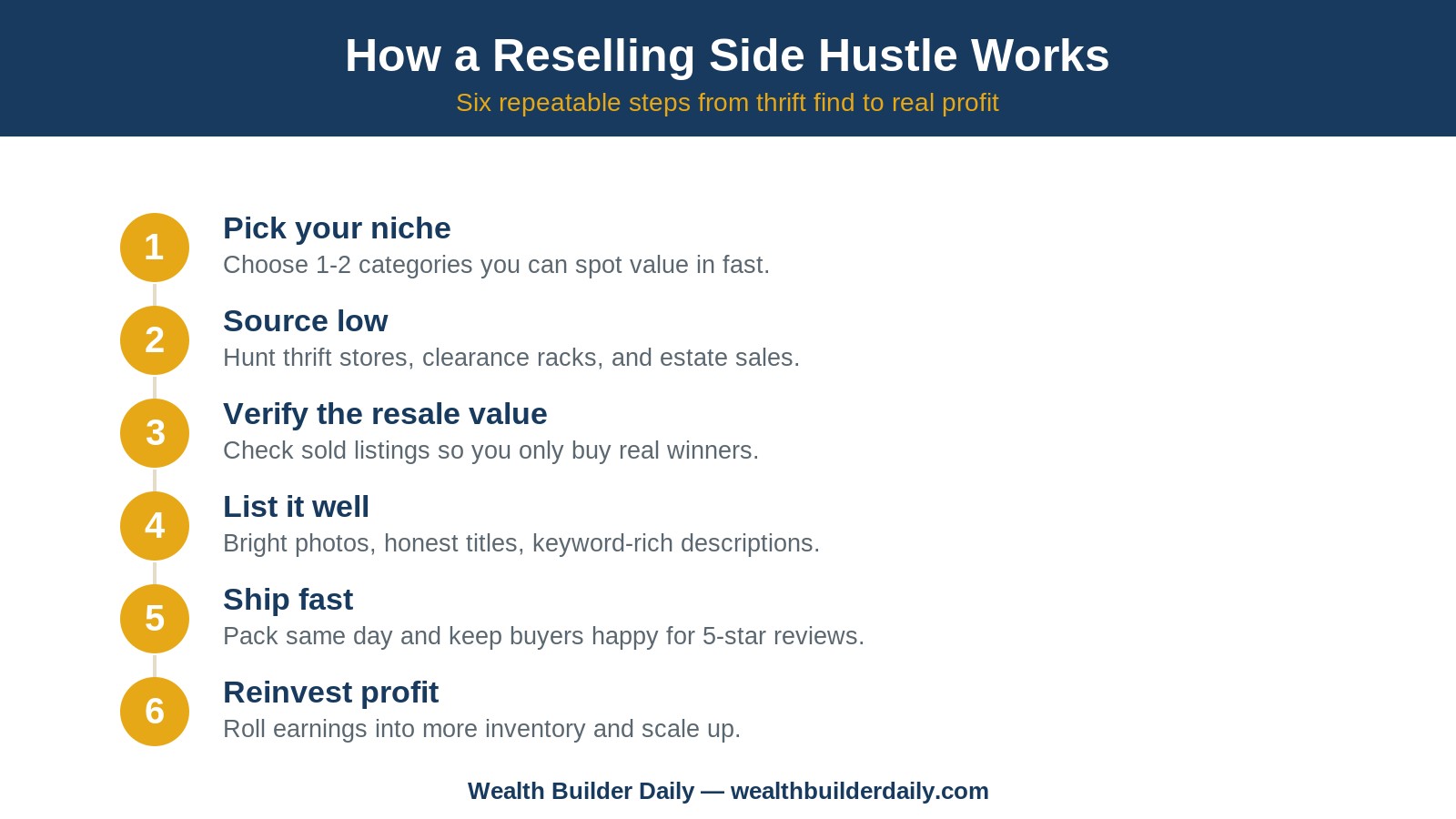
How a Reselling Side Hustle Works
A reselling side hustle works on one simple idea: prices are inefficient. The same item can sell for $4 at a thrift store and $45 on eBay because the buyer there is searching for that exact thing. Your job is to stand in the middle of that gap and capture the difference.
The mechanics break down into a handful of moving parts:
- Sourcing: Finding inventory cheap, from thrift stores, garage sales, clearance bins, or free piles.
- Valuation: Checking what an item has actually sold for so you only buy real winners.
- Listing: Writing clear titles, taking bright photos, and describing condition honestly.
- Pricing: Setting a number that beats the gap between your cost and the market rate.
- Fulfillment: Packing and shipping fast, or arranging quick local pickup.
- Reinvestment: Rolling profit back into more inventory so your hustle compounds.
The beauty is that none of these steps require talent you don't already have. You're learning patterns: which brands hold value, which categories ship easily, and which "boring" items quietly sell every single week in 2026.
What makes reselling so durable as an income stream is that it pays you for attention, not for money or credentials. Every flip teaches you something: a brand you didn't know was valuable, a category that ships cheap, a price point that moves fast. Over a few weeks those lessons compound into an instinct, and you start spotting profit on shelves that other shoppers walk right past. That skill never expires, and it works in any economy because there will always be someone selling low and someone else willing to buy at market.
How to Choose the Right Items to Flip
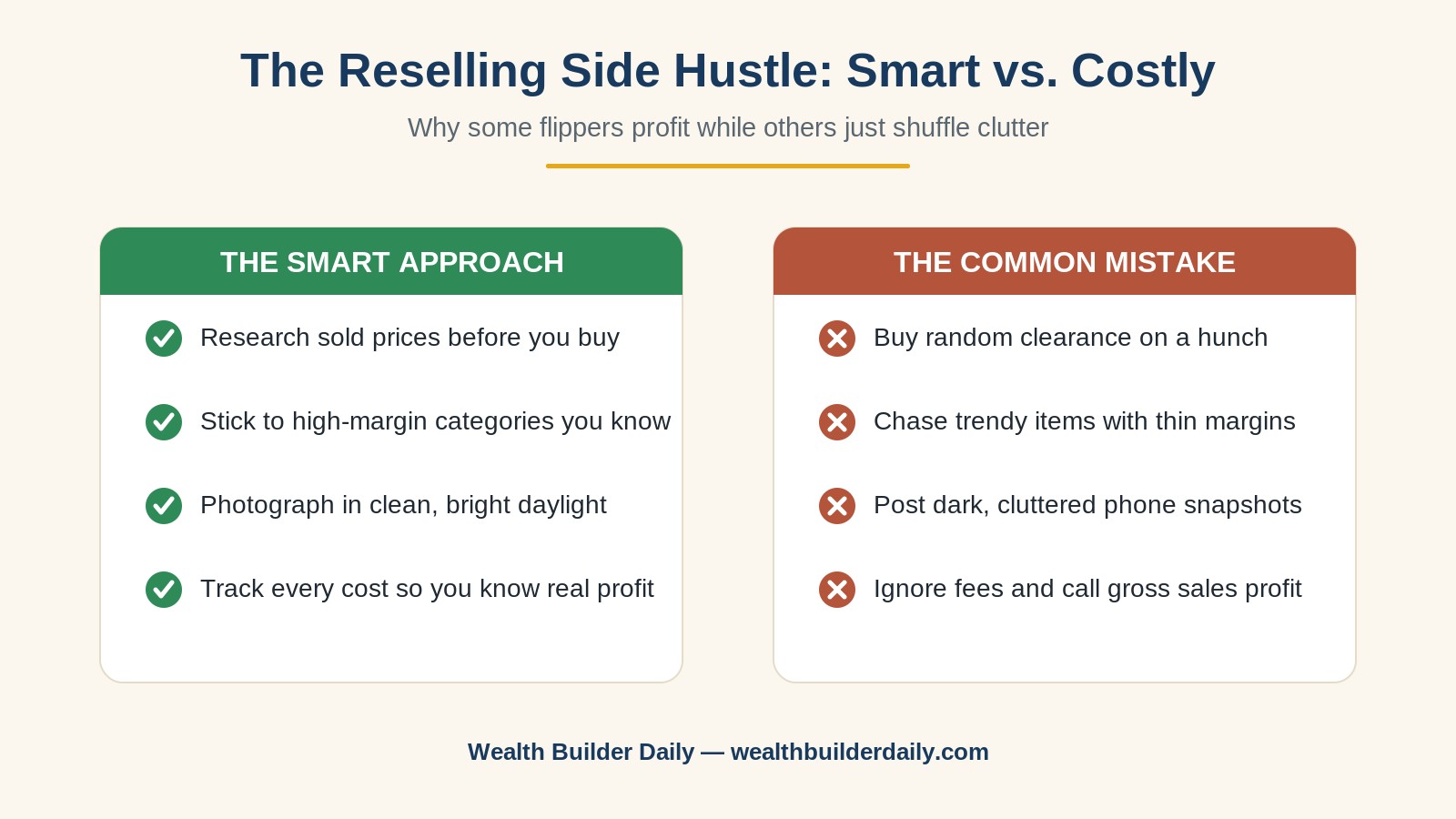
Picking the right inventory is where most of your profit is won or lost. Use these criteria to decide what's worth your cart space:
- Proven resale demand. Before you buy, search the item on your platform and filter to "sold" listings. If it sells often and for a healthy price, it's a candidate. If nothing comes up, walk away.
- High margin, not just high price. A $60 jacket that cost you $5 beats a $200 item that cost you $150. Chase the spread between cost and sale price, not the sticker.
- Easy to ship. Lightweight, sturdy, non-fragile items (clothing, books, small electronics) keep shipping cheap and breakage near zero.
- Recognizable brands. Buyers search by brand. Known names in clothing, tools, kitchenware, and electronics sell faster than no-name goods.
- Condition you can honestly call good. Stains, cracks, and missing parts kill margins and trigger returns. Buy items you'd be happy to receive yourself.
- Year-round or seasonal fit. Coats sell in fall, fans sell in summer. Buy off-season cheap, sell in-season high if you have room to store.
Here's an expert tip with real numbers: aim for a minimum of $15 profit and a 3x return per item when you're starting. If you buy a pair of brand-name sneakers for $8 and they sell for $48, after roughly $8 in shipping and $6 in fees you net about $26, a clean 3x-plus return. Stack ten flips like that a week and you're already past $1,000 a month. Funnel part of that into a high-yield savings account so your hustle builds wealth, not just spending money.
Online Reselling vs. Local Reselling
Online reselling (eBay, Poshmark, Mercari) gives you a national buyer pool and higher prices, but you handle photos, shipping, and fees. Local reselling (Facebook Marketplace, OfferUp) means no shipping and instant cash, ideal for furniture and bulky gear, but smaller margins and meet-ups. Most pros do both: ship the small, valuable stuff and sell the big, awkward stuff locally.
Reselling for Every Situation
A reselling side hustle bends to fit your life, your space, and your goals. The right setup looks different depending on who you are.
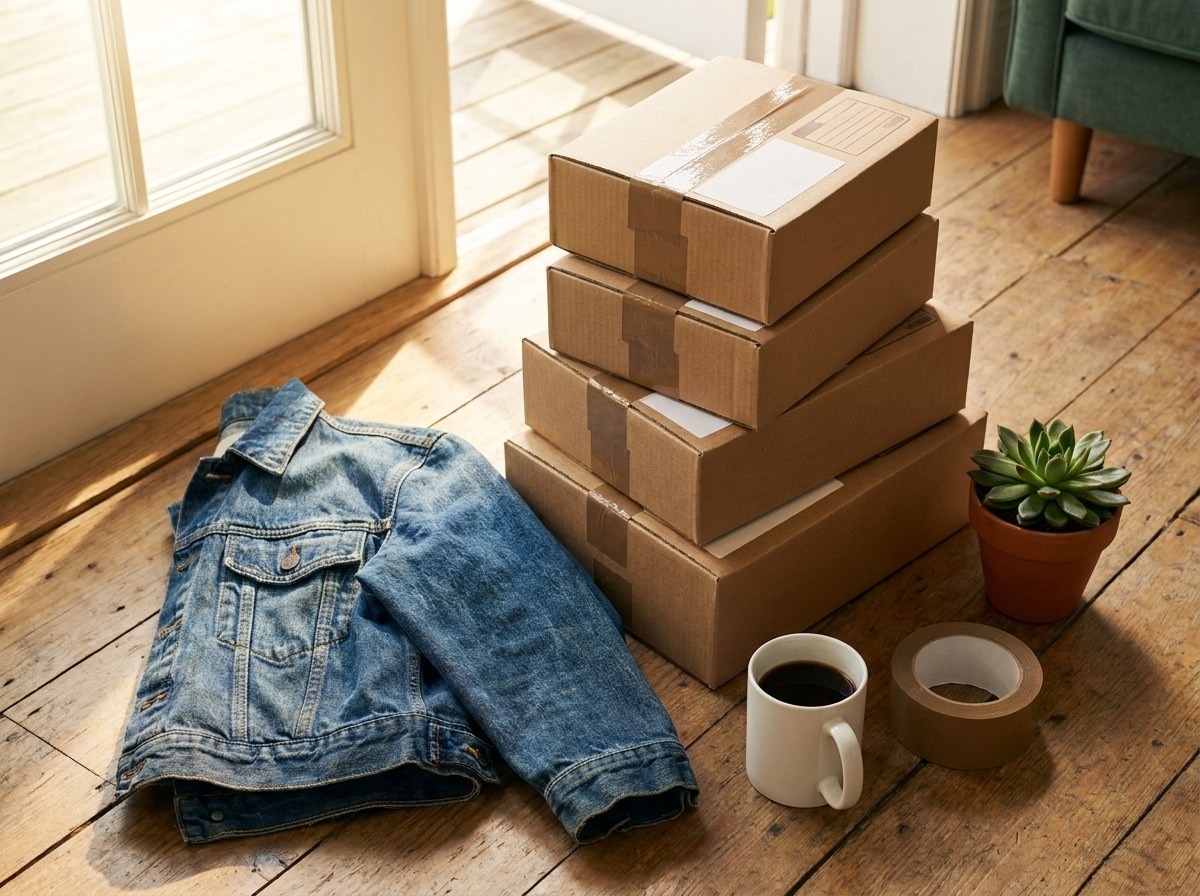
The honest truth is that there's no single "right" way to resell. The parent squeezing in listings between school runs and the retiree clearing out estate sales are running the same playbook at different speeds. What matters is matching your effort to your calendar so the hustle feels sustainable instead of like a second job you resent.
Here are three common situations and the smart approach for each:
- The busy parent with 30 minutes a day: Stick to clothing and shoes you can photograph in a batch on the weekend and list from your phone during downtime. Pair it with another flexible income stream like a virtual assistant side hustle on slow weeks.
- The college student with no startup cash: Start by reselling items you already own, then reinvest every dollar of profit into thrift sourcing. Zero out-of-pocket risk, pure compounding.
- The full-time worker wanting a serious side income: Build a weekly rhythm, source on Saturday, list on Sunday, ship on weekdays, and track everything so you can scale toward replacing real bills.
Beginner, Intermediate, and Advanced Setups
Beginner: sell 5 to 10 closet or thrift items a week from your phone, learning the platforms with zero pressure. Intermediate: pick one or two niches, build a small inventory shelf, and aim for 20-plus listings a week. Advanced: add a printer for shipping labels, track profit in a spreadsheet, and consider buying small lots or storage-unit finds to scale volume.
Personalizing Your Approach in 2026
The smartest 2026 move is to lean into a niche you genuinely understand, whether that's vintage denim, board games, kitchen gadgets, or power tools. Niche knowledge lets you spot underpriced gems other resellers miss, and it makes your listings more credible to buyers. If you also enjoy creating, you can branch into selling digital products for income that doesn't require sourcing or shipping at all. The 2026 reseller who wins isn't the one with the biggest budget, it's the one who shows up every week, learns from each flip, and treats this like the real business it can become.
Frequently Asked Questions
How much money do I need to start a reselling side hustle?
You can start with $0 by reselling items you already own, then reinvesting the profit into inventory. If you'd rather source right away, $20 to $50 is plenty for a handful of thrift finds. The key is reinvesting early earnings instead of pulling cash out, so your inventory and income grow together over time.
What are the best things to resell for beginners in 2026?
Clothing and shoes from recognizable brands, small electronics, books, and home goods are the easiest wins for beginners. They're cheap to source, simple to ship, and have steady demand. Always check "sold" listings first to confirm an item actually moves at a price worth your time before you buy it.
Do I have to pay taxes on reselling income?
Yes. Reselling profit is taxable income, and in 2026 payment platforms report earnings over the IRS threshold. Track what you spend on inventory, shipping, and fees, since those costs reduce your taxable profit. Keeping a simple spreadsheet from day one makes tax time painless and shows you your true bottom line.
Final Thoughts
A reselling side hustle turns everyday thrift finds into real, repeatable income, and you can start this weekend with whatever you already have at home. The promise we opened with holds: buy underpriced, sell at market, reinvest the difference, and $1,000 a month is a realistic 2026 goal for a consistent flipper.
Here's why this approach works better than chasing complicated schemes:
- Plain-language guidance: Every step is explained in simple terms, no jargon or guesswork.
- Real numbers and examples: We use actual costs, fees, and profit math so you know what to expect.
- Proven, time-tested methods: Reselling is a decades-old model that still works because price gaps never disappear.
- Free, practical tools and guides: Our resources help you source, price, and scale without paying for courses.
Your next step is simple: pick five items, list them this week, and let the momentum build from there. As your profits grow, put them to work with the rest of our money guides at Wealth Builder Daily, and review the official seller and tax basics at the Consumer Financial Protection Bureau so your side hustle stays clean and stress-free. The flip you make today is the first dollar of the income stream you'll thank yourself for in 2026.
The Newsletter
Get the Free Budget Tracker
Join our weekly newsletter. Practical money guides, no fluff. Unsubscribe anytime.